
1367 - Carbon County Arts Guild
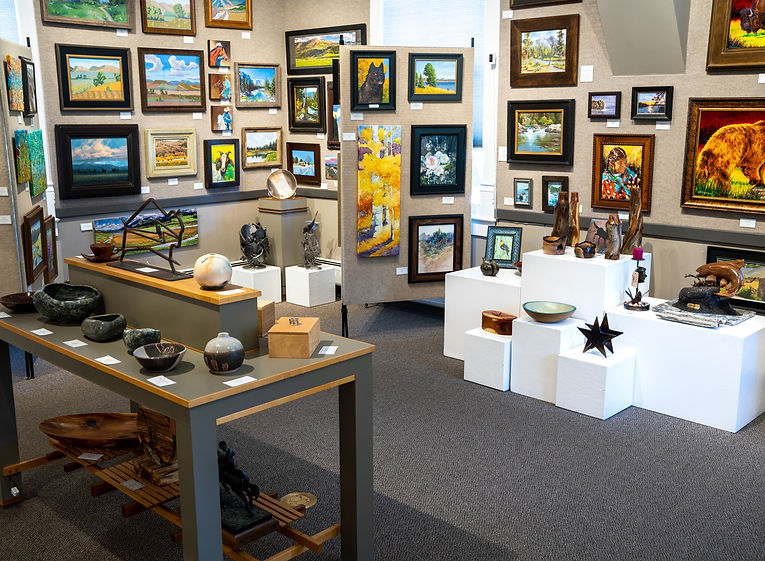
The Carbon County Arts Guild and Depot Gallery, led by executive director Kim Kapalka, champions regional artists while providing the community access to art and creative experiences. It has grown into a vibrant arts destination in south-central Montana.
"When you walk up to the Carbon County Arts Guild and Depot Gallery in Red Lodge, you’re greeted by a beautifully restored railroad depot with worn red siding, wide eaves, and a carved Native figure sitting proudly in front. The building itself is the original 1889 Rocky Fork and Cooke City Railway depot, once a vital stop for passengers, freight, and mail heading into the Beartooths. Today, instead of ticket counters and cargo, it houses paintings, pottery, and sculpture, though much of its structure remains exactly as it was over a century ago.
Inside you’ll see the original ticket windows in the front gallery. The central hall, where passengers once waited for the train, now serves as our rotating exhibition space. The former freight room hosts art classes, workshops, and gallery talks. Even the old rail tracks out back are intact, complete with a caboose relocated here in the 1980s.
The Carbon County Arts Guild was founded in 1973 by local residents who believed rural communities deserved access to the arts. For years, members moved from place to place, operating out of borrowed offices, storage spaces, and even private homes, until Burlington Northern donated this historic depot in 1982. After major renovation efforts funded by grants, fundraisers, and volunteer labor, the Guild officially moved in on September 1, 1983. It has been a cornerstone of Red Lodge’s cultural life ever since.
Today we represent nearly 140 regional artists and offer monthly exhibitions, educational programming, and outreach to local schools. One of our newest projects is the Beartooth Artist-in-Residence program, launched with the Yellowstone Bighorn Research Association. Each summer, selected artists spend up to two weeks at the YBRA Field Station creating work inspired by Montana’s high country. At the end of their stay, they present their work to the public and exhibit it here in the gallery, bringing wilderness, science, and art together under one roof.
We’re free and open to the public year-round. Whether you’re here to shop for a handmade treasure, sign up for a class, or just wander through history and imagination under one roof, come on in. To learn more or see what’s on display, visit carboncountydepotgallery.org."