
776 - Chautauqua Park History
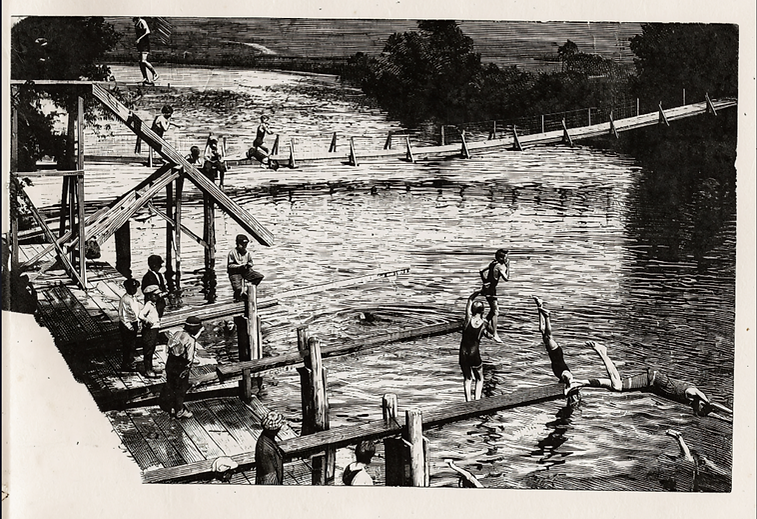
In the late 19th and early 20th centuries, communities across America gathered for Chautauqua assemblies, summer programs that blended entertainment and education. Lectures, musicians, performers, and thinkers traveled from town to town, bringing culture, ideas, and art to rural places long before radio or movies existed. Valley City became one of those destinations.
Along the river, white canvas tents were pitched among the trees, each with a small wooden platform at its entrance. Cars lined the grass nearby, and men in suits and women in long dresses filled a vast tented auditorium, often standing room only. On warm evenings, a telescope was trained on Jupiter and Saturn as orchestras played crowd favorites, and fireworks lit the sky on the Fourth of July. Children rode the merry-go-ground, and swimming was a popular draw though it was segregated. Men and women used separate swimming areas and times, reflecting the social norms of the era. Religious revivals were also a central part of life at the park, with large gatherings for preaching, hymn singing, and spiritual reflection drawing crowds from across the region.
That was Chautauqua Park at its height, a cultural crossroads where education and entertainment met the outdoors. In 1912, the park hosted North Dakota’s first Boy Scout encampment, when a single troop hiked 16 miles from nearby Kathryn to camp here. National figures passed through, including former President William Howard Taft in 1922. The park was anchored by a grand pavilion, its domed presence drawing crowds from across the region.
Over time, the Chautauqua movement faded. The pavilion was moved to the old North Dakota Winter Show grounds, marking the close of an era even as the park itself endured. Today, Chautauqua Park is quieter, but no less vibrant. Spread across 16 acres at the foot of the Hi-Line Bridge, it remains one of Valley City’s most beloved green spaces. Where tents once dotted the landscape, families now gather at picnic tables, children climb and swing, and dogs enjoy their designated area. The park is also home to an accessible canoe and kayak launch on the Sheyenne River, part of the Sheyenne River Water Trail and one of the trail’s most popular access points. Friends meet for volleyball, fishing, reunions, and long summer evenings under the new pavilion, carrying forward the park’s enduring spirit of community and recreation.
Chautauqua Park’s story is just one chapter in Valley City’s long relationship with gathering, creativity, and connection to place. When you’re ready, continue exploring Valley City’s other treasured spaces, from the quiet paths of Pioneer Park to the symbolic presence of Medicine Wheel Park, and discover how these places tell the story of a community rooted in history and everyday life.