
965 - Turtle Mountain Reservation Origins
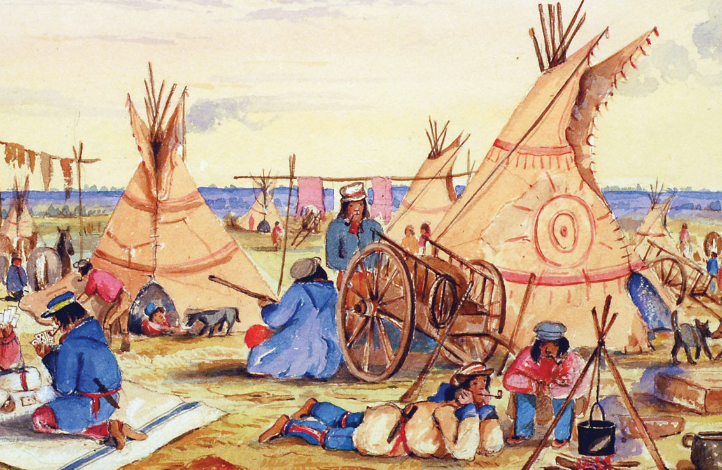
With the dwindling bison population, change was inevitable for the Pembina Chippewa and their Metis/Michif relatives. By the 1889s, the buffalo were facing extinction, and those dependent upon the bi-annual hunts were on the brink of devastation. Chief Little Shell III, who fiercely represented the interest of the Turtle Mountain Band of Chippewa, began advocating for a change, federal recognition of a reserved land base for the Pembina Chippewa and their relatives in the Turtle Mountain region. As one can imagine, this was a bumpy, maddening process.
It began in 1873 when the federal government made several attempts to relocate the Pembina Chippewa to the White Earth Indian Reservation in Minnesota. While some moved east to that area, Little Shell III stood firm in his belief that a reservation was needed in the Turtle Mountain area. Another attempt was made to relocate the Pembina Chippewa to the Fort Berthold Indian Reservation, but, not surprisingly, Chief Little Shell found this unacceptable. Finally, on December 21, 1882, an Executive Order by President Chester Arthur recognized a 24 by 32 mile reservation in the unceded territory occupied by the Pembina Chippewa as the Turtle Mountain Indian Reservation. However, the story doesn’t end here.
In 1884, the federal government decided that most of the population of the Pembina Chippewa was from Canada. In what was likely questionable census information, the government drastically reduced the size of the reservation. Two executive orders followed, which resulted in a six by twelve mile reservation. This was inadequate for the population of Chippewa and Metis/Michif who called this area home. The Grand Council was stunned and greatly opposed the reduction of the reservation boundaries. Chief Little Shell III faithfully attempted to restore the original reservation boundaries until his death in 1900, though it wasn’t enough as the borders remained the same. Because of this, there was not enough land inside the reservation. Allotments came from the public domain in South Dakota and Montana, far away from the Turtle Mountain Reservation. Many of the Chippewas who were essentially forced to move to the allotments never returned to the Turtle Mountains. Hear more about Turtle Mountain Reservation, its challenges, champions, and history at other stops along this Talking Trail.