
1307 - Roseau Floods
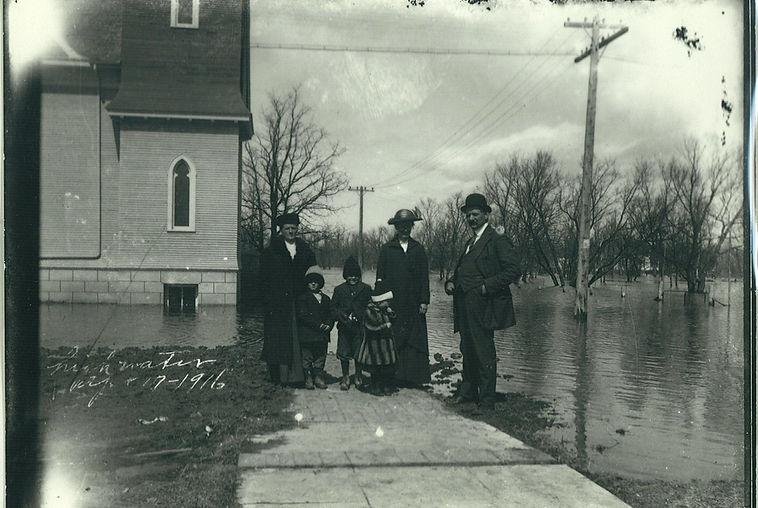
Flooding has shaped Roseau County for generations. Settlers in the late 1800s quickly learned the Roseau River could spill far beyond its banks during heavy rains and spring thaw. The 1916 flood was one of the first major disasters, isolating farms and covering roads for miles. In 1950, high water tested the community once again, leading to improved ditches, levees, and emergency planning. Still, pattern held: repeated high water meant recurring floods.
That reality struck hard in June 2002.
After two days of relentless rain, with up to 20 inches falling across the region, the Roseau River surged out of its banks on June 11. Floodwaters came from multiple directions, spilling over the river, flowing in from higher ground west of town, and backing up through storm sewers. In about 24 hours, the river rose roughly 15 feet and crested at 23.4 feet, far above the 16-foot flood stage.
The speed caught many off guard. Residents were still filling sandbags as parts of town went underwater. Nearly 90 percent of businesses and 85 percent of its residents were affected. In a town of about 2,600 people, almost everyone felt the impact.
More than 70 structures were later removed due to severe damage, including the police department, library, museum, and city hall. Downtown businesses were all affected, and homes east of the river filled quickly. Streets became waterways, with boats and heavy equipment replacing cars.
As the water levels rose, attention turned to protecting critical facilities. The hospital, school, water treatment plant, and Polaris Industries became priorities. A temporary dike was constructed along Highway 89 as water began spilling over it. Without that barrier, the plant and the livelihoods of roughly 1,500 employees would likely have been lost.
When the water receded, months of cleanup followed. Basements filled with mud, inventory was ruined, and damaged materials lined the streets. Some homes and businesses were never salvaged. The economic effects lingered long after the flood.
Recovery required persistence. About $100 million in public infrastructure improvements were completed over time, including a new storm sewer system and rebuilt streets and utilities. The east side diversion channel, about 4.5 miles long, was finished in 2015 to help steer floodwaters around the city.
Funding came gradually through federal, state, and local sources, requiring years of steady advocacy. The process was slow and sometimes contentious, but it left the community far better protected.
Today, most of Roseau is no longer in the federal 100-year floodplain, reducing the need for mandatory flood insurance. New public buildings stand where losses once occurred. Like in 1916 and 1950, Roseau rebuilt, proving again its resilience in the face of the river.