
441 – Battle Lake
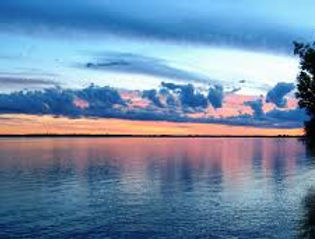
Large tracts of fertile land, a pristine lake and the railroad all contributed to the formation of Battle Lake. With Clitherall established by the end of 1865, word spread quickly of vast acres of available homestead land. Americans from other states and European immigrants made their way to Otter Tail County. Among them was Norwegian immigrant Torger Olson.
Olson came to America in 1851 first settling in Iowa where he met and married Bertha Holt. They left Iowa in 1871 to homestead in Otter Tail County. In 1881, the railroad and a station were scheduled to go through Torger and Bertha’s homestead. Being a foresighted couple, the Olson’s opened their home as a boarding house and laid out their homestead into lots and blocks. As a result, Battle Lake’s first plat was signed by Torger and Bertha on October 31, 1881.
From its formation Battle Lake has been a summer town as visitors head “to the lake.” People from all walks of life have enjoyed its scenic beauty including one of the 20th century’s most important figures.
In 1952 Dwight Eisenhower, then a presidential candidate and former Supreme Commander of Allied Forces during World War II, attended Sunday services at First Lutheran Church. Ike’s connection to Battle Lake came through what is now Glendalough State Park.
Breckenridge, Minnesota businessman Ezart Valentine purchased a parcel of land northeast of Battle Lake. He built a cabin, later adding a summer home, stable and bridge between Annie Battle and Molly Stark lakes. He sold the property in 1926 to F.E. Murphy, a Minneapolis newspaper publisher. Murphy started a game farm and camping retreat he called Glendalough after a Scottish castle.
Glendalough was handed over to the Cowles family in the early 1940s when they purchased the Minneapolis Tribune which later became the Minneapolis Star Tribune. Kept intentionally rustic, the Cowles entertained America’s corporate and political elite as a place to escape the public eye. In 1990, Cowles Media donated the property to the Nature Conservancy for conversion into a state park.